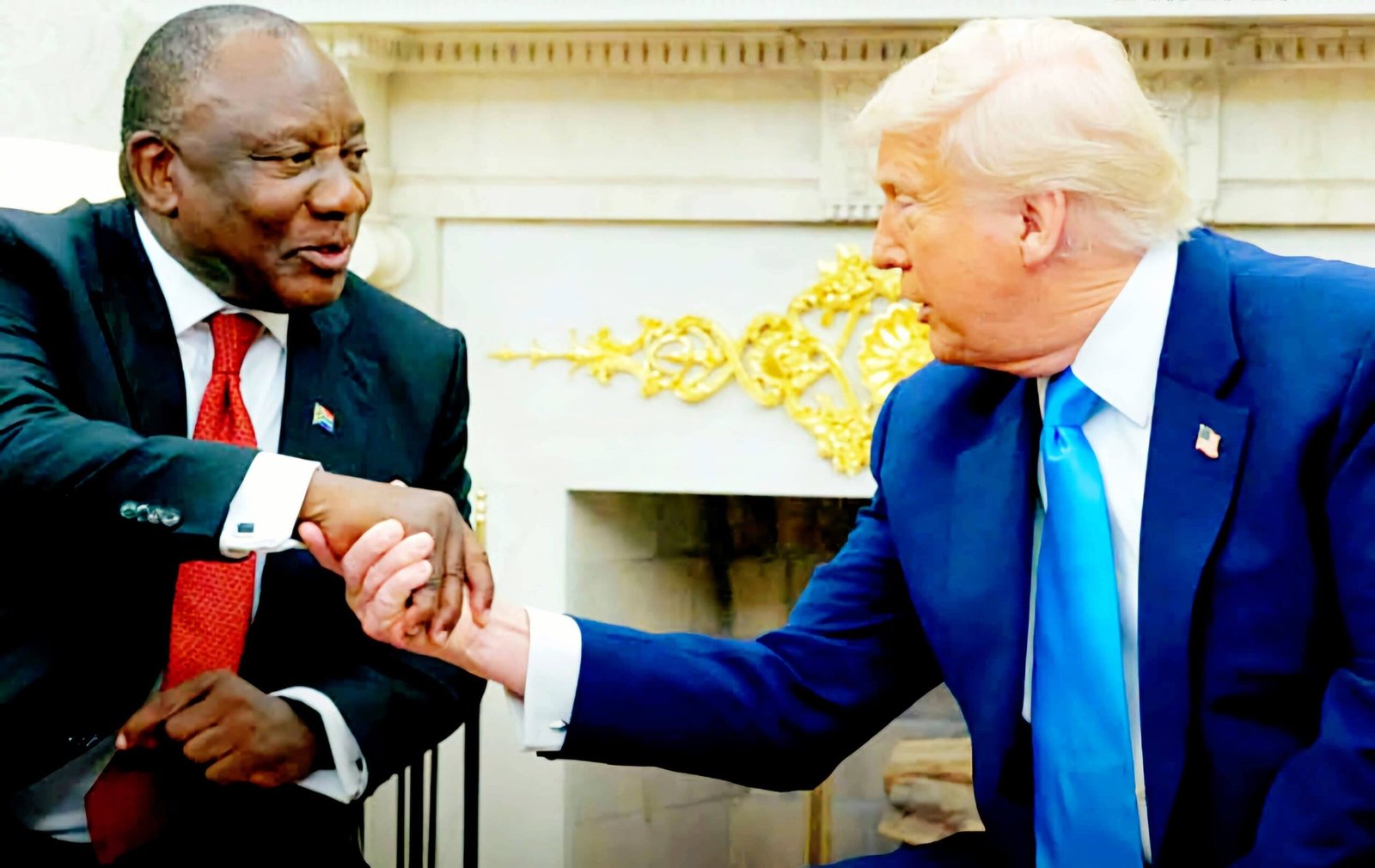
South Africa’s President, Cyril Ramaphosa, has publicly expressed his opposition to the proposed 30% tariff on South African goods, recently announced by former U.S. President Donald Trump. The tariff proposal, which forms part of a broader economic strategy linked to trade realignments, has raised concerns not only within South Africa but also among global trade observers who fear its potential impact on international relations and emerging market economies.
The proposed tariff, aimed specifically at South African exports to the United States, is part of Trump’s ongoing rhetoric emphasizing national self-interest and the protection of American industries. While the former president has defended the measure as necessary to correct what he describes as “unfair trade practices,” critics, including President Ramaphosa, have highlighted the disproportionate impact such actions could have on developing economies, particularly those reliant on trade with the United States.
In a recent statement, Ramaphosa emphasized the importance of maintaining open trade channels between South Africa and the U.S., noting that punitive tariffs not only threaten economic growth in his country but could also strain diplomatic ties that have historically been cooperative and mutually beneficial. “South Africa has always sought to engage with its trading partners in good faith,” Ramaphosa remarked. “Imposing steep tariffs on our products undermines the principles of fair trade and collaboration that both our nations have long upheld.”
The suggested tariffs are aimed at various South African products, such as metals, farm goods, and manufactured products, which are vital to the nation’s export-driven economy. The United States is an important trade partner for South Africa, and the possibility of a 30% tariff brings the threat of job cuts, decreased investment, and economic uncertainty, especially as the country works to bounce back from the financial impacts of recent global issues.
Economists have expressed their opinions on the possible outcomes, indicating that these tariffs might not only affect South Africa’s export industries but could also create a concerning standard for interactions between larger economies and emerging markets. A number of analysts believe that this action represents a trend toward protectionism, which might have wider consequences for international trade standards, whereas others propose that nations like South Africa should consider expanding their range of export markets to lessen the risks associated with these independent measures.
In his speech, Ramaphosa advocated for engaging in constructive conversations as the ideal method for settling trade disagreements. He highlighted South Africa’s dedication to a rules-based global trading framework, supported by organizations such as the World Trade Organization (WTO). He further stressed the importance of fair trade actions that acknowledge the disparities between developed and emerging economies.
The potential impact of the proposed tariffs extends beyond economics. Observers warn that trade tensions could strain the diplomatic relationship between the two countries, which has historically been characterized by cooperation in areas such as security, education, and development aid. South Africa has long been viewed as a strategic partner for the United States in Africa, and any deterioration in bilateral relations could have ripple effects across the continent.
The suggested tariff is under consideration within the framework of South Africa’s membership in the BRICS group, an association involving Brazil, Russia, India, China, and South Africa that seeks to enhance economic collaboration among developing nations. Trump has earlier expressed doubt about nations affiliated with the BRICS coalition, indicating that the group poses a challenge to Western economic supremacy.
Ramaphosa, however, has reiterated that South Africa’s international relationships are not mutually exclusive and that his government remains committed to fostering positive relations with both Western nations and its BRICS partners. “We believe in the power of multilateralism,” he stated. “South Africa’s development is best served by engaging with all corners of the world, without being drawn into divisive economic policies.”
Trade unions and business leaders in South Africa have joined the chorus of concern over the proposed tariffs. Representatives from key industries—including mining, agriculture, and manufacturing—have warned that the imposition of steep tariffs could lead to significant job losses, at a time when South Africa is grappling with high unemployment rates and economic inequality.
Small and medium-sized businesses, especially, are likely to face a significant impact. A large number of these companies depend on international markets for their operations, and the additional expenses due to tariffs might make their products less competitive in American markets. Industry leaders have urged the South African government to initiate immediate diplomatic talks to find a solution and look into different markets if the tariffs come into effect.
For its part, the U.S. has maintained that the tariffs are intended to protect domestic industries from what it perceives as unfair competition. Trump’s stance on trade has long favored protectionist measures, with the argument that such policies safeguard American jobs and industries from foreign competition. However, critics argue that such measures often provoke retaliatory tariffs, disrupt supply chains, and harm consumers through increased prices.
La comunidad internacional más amplia observa la situación con atención. Los mercados mundiales siguen siendo sensibles a las interrupciones comerciales, especialmente dado que muchos países aún se recuperan de los impactos económicos de la pandemia de COVID-19 y la continua inestabilidad geopolítica. Los economistas advierten que el aumento de las tensiones comerciales entre EE.UU. y socios clave como Sudáfrica podría aumentar la incertidumbre económica en un momento en que se necesita urgentemente estabilidad.
As discussions continue, Ramaphosa has reiterated South Africa’s readiness to engage constructively with U.S. trade representatives. He has also suggested that both countries could explore expanded cooperation in areas such as green technology, digital innovation, and infrastructure development—sectors that offer potential for mutually beneficial growth without resorting to punitive economic measures.
The scenario highlights the growing intricacies of international trade relationships in today’s world. As countries manage conflicting priorities, evolving partnerships, and domestic political pressures, the task is to identify common ground that promotes fairness, equity, and mutual prosperity.
While the proposed tariffs have not yet taken effect, the looming possibility has already sparked important conversations in both South Africa and the United States about the future of bilateral trade relations, the role of emerging economies, and the path forward in an increasingly interconnected global economy.
For South Africa, the hope remains that dialogue, rather than division, will prevail, allowing both nations to continue building a relationship that supports growth, opportunity, and mutual respect. For the international community, this moment serves as a reminder of the delicate balance between national interests and global cooperation—an equilibrium that will shape the contours of trade for years to come.