Following the extinction of the dinosaurs roughly 66 million years ago, alternative biological organisms adjusted to an evolving globe. A massive mushroom recently discovered in China is providing researchers with fresh perspectives regarding fungal development and the extraordinary biodiversity that still remains unmapped.
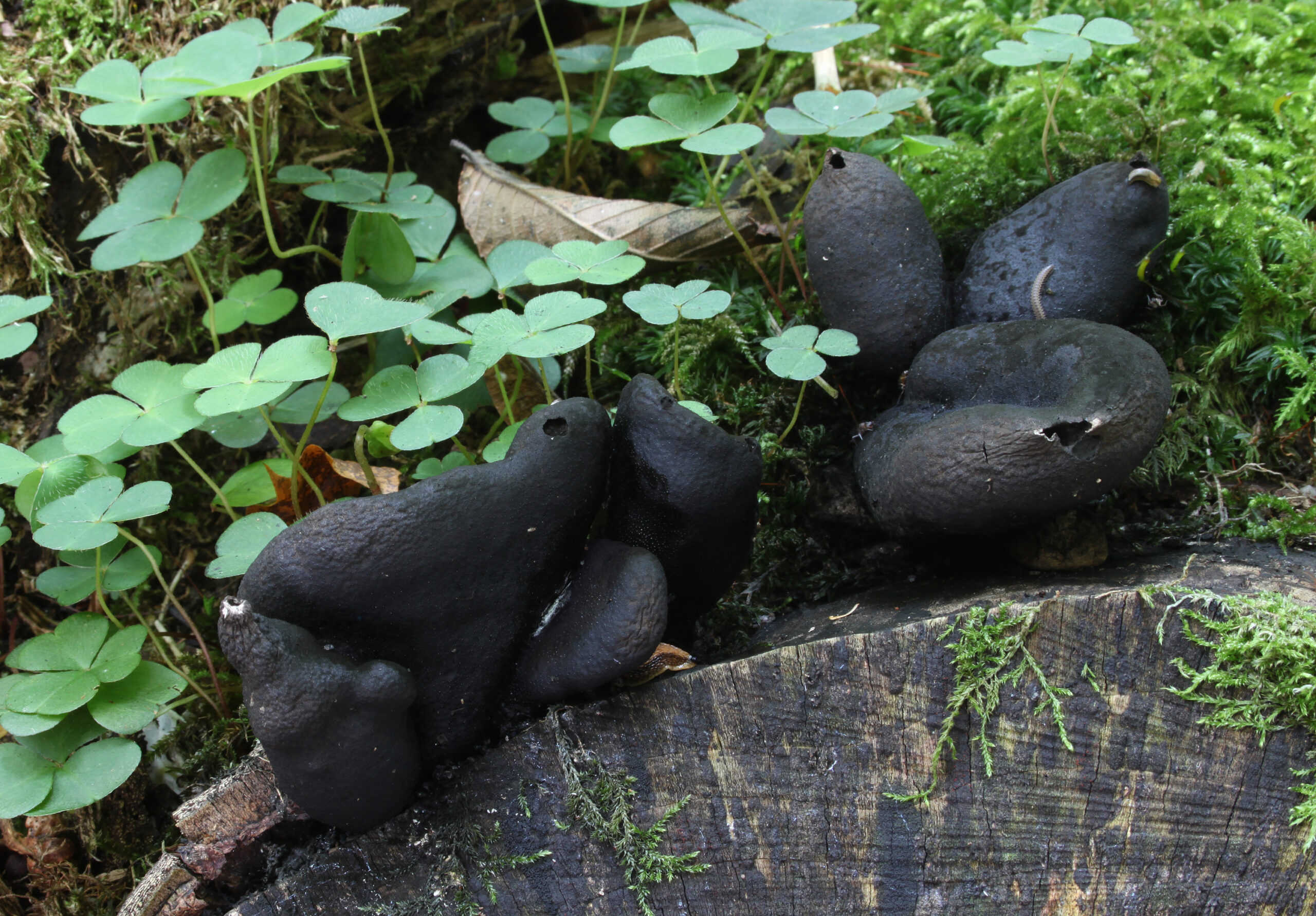
A newly identified fungus found in the forests of Yunnan province in southwestern China is attracting scientific attention because of its extraordinary size and evolutionary history. Named Dianjunus rex, the species produces upright reproductive structures that can reach approximately 20 inches (50 centimeters) in height and weigh nearly 5 pounds (2.2 kilograms).
Its name draws a parallel to Tyrannosaurus rex, the well-known dinosaur frequently dubbed the monarch of ancient predators. Even though both organisms differ immensely, this moniker highlights the fungus’s impressive standing relative to its kin. Instead of dominating primeval ecosystems via predation, D. rex embodies an atypical lineage of fungal variety whose evolutionary trajectory could be linked to the ecological shifts following one of the planet’s most severe mass extinction periods.
The findings were published on September 28 in the scientific journal Frontiers in Fungal Biology. Beyond introducing a previously unknown species, the research identifies an entirely new family of fungi and offers clues about how these organisms evolved and adapted to their environments.
A fungus that stands out for its size
One of the most distinctive features of Dianjunus rex is the size of its fruiting bodies, known as stromata. These reproductive structures grow upright and have a fleshy appearance, with elongated projections resembling clustered fingers.
Upon first appearing, the stromata exhibit a pale yellow hue. As the fungus develops, this coloration slowly deepens. Ultimately, these formations can attain a height of roughly 20 inches, an exceptionally large size for specimens within their specific taxonomic classification.
The discovery is particularly significant because D. rex belongs to the phylum Ascomycota, one of the most diverse groups of fungi. This phylum includes organisms as varied as morels, truffles and yeasts, along with thousands of species that are microscopic or rarely observed in the wild.
Before the discovery of D. rex, one of the largest known members of this group was Engleromyces goetzei, a bulky brown fungus found in Kenya. Its fruiting body can reach nearly 12 inches (30 centimeters) in diameter and weigh approximately 7 pounds (3.2 kilograms).
However, D. rex is distinguished by the impressive height of its reproductive structures alongside their unique growth patterns. Numerous closely related fungi barely reach a height of a few inches, whereas others are so diminutive that proper examination demands specialized laboratory instruments.
Kabir Peay, a professor of biology and Earth system science at Stanford University, emphasized the importance of discovering fungi with such unusual characteristics. He noted that spectacular specimens help researchers appreciate the extraordinary range of fungal forms that science has yet to document.
How the extinction of the dinosaurs may have influenced fungal evolution
Another significant focus of the research involves the evolutionary roots of Dianjunaceae, the recently classified family comprising Dianjunus rex. Through genetic material analysis and cross-referencing the fungus with kindred organisms, researchers calculated that this family originated roughly one million years subsequent to the asteroid strike that concluded the Cretaceous Period.
Approximately 66 million years ago, that cataclysmic event sparked a mass extinction capable of wiping out all non-avian dinosaurs alongside roughly 75% of the planet’s flora and fauna.
The ecological impact proved immense. Photosynthesis suffered due to diminished sunlight, whereas vast amounts of decaying foliage, timber, roots, and fauna debris piled up throughout impacted habitats. Consequently, these shifts destabilized trophic networks, severely hindering the survival prospects of numerous species.
Yet the abundance of dead organic material may also have created opportunities for decomposers. Fungi play a central role in breaking down dead plants and animals, returning nutrients to the environment and supporting the continued functioning of ecosystems.
Indunil Senanayake, a coauthor of the study and associate professor at the Kunming Institute of Botany in China, explained that these conditions may have benefited certain groups of fungi. Although the precise relationship between the mass extinction and the emergence of Dianjunaceae remains a subject for further investigation, the findings illustrate how major environmental disruptions can influence the evolution and diversification of life.
A local observation led to a scientific discovery
Researchers identified Dianjunus rex during fungal diversity surveys conducted in the forests of Yunnan province in 2024 and 2025. However, local residents had noticed the unusual organism before scientists began investigating it.
Local farmers had come across groups of fleshy, finger-shaped growths developing near a deceased tree. Even though its peculiar look was undeniable, the fungus had not previously drawn much academic interest.
Everything shifted once a community member posted pictures of the creature online. Those photos motivated the experts to dig deeper, inspect physical samples, and run genetic tests to determine the exact species and its phylogenetic connections.
Senanayake reported that some local people had even tasted the fungus without experiencing noticeable adverse effects. However, the researchers have not conducted sufficient toxicity testing to establish whether it is safe to eat. The absence of reported symptoms should therefore not be interpreted as evidence that the species is edible.
This finding has additionally sparked inquiries concerning the reasons behind the substantial growth of reproductive organs in D. rex. Typically, ascomycetes refrain from generating massive stromata, a tendency likely linked to the substantial metabolic cost required for their construction and upkeep.
One possibility is that the fungus’s height offers a reproductive advantage. Its upper structures contain thousands of tiny pores through which spores are released. In the forest environments where the species grows, the ground is often covered with fibrous plant material that could interfere with the movement of spores.
By raising its reproductive structures above the forest floor, D. rex may increase the likelihood that its spores travel farther and reach suitable locations for growth. Researchers will need to conduct additional studies to determine whether this explanation accounts for its unusual size or whether other biological and environmental factors are involved.
Why researchers still have so much to discover regarding fungi
The identification of Dianjunus rex highlights a significant gap in scientific knowledge. Researchers have formally described approximately 150,000 fungal species, but some estimates suggest that between two million and 13 million species may exist worldwide.
The gap between these numbers demonstrates that a significant share of fungal biodiversity is still unrecorded. Numerous species dwell within hard-to-access habitats, whereas others prove difficult to recognize since their visible structures emerge exclusively under precise circumstances.
The vast majority of any fungus is composed of tiny, thread-shaped filaments known as hyphae. Collectively, they create a web called the mycelium, which generally develops beneath the ground, within rotting timber, or amid plant matter. Those reproductive forms that individuals identify as mushrooms, along with other visible fungal manifestations, merely constitute a fraction of the living entity.
These formations can develop when environmental conditions prove favorable or throughout specific phases of the fungal life cycle. Consequently, a substantial and conspicuous species like D. rex may easily elude detection for years.
Stanford’s Peay emphasized that cataloging fungal varieties serves as a crucial initial phase in grasping their ecological functions. Researchers first need to determine which organisms are present prior to exploring the ways those species engage with flora, fauna, and their environment.
Fungi contribute to the carbon cycle, break down organic matter and support the growth and nutrition of many plants. Understanding their diversity is therefore important not only for taxonomy and evolutionary biology but also for broader research into ecosystem health.
Ultimately, Dianjunus rex stands for far more than just a remarkably massive fungus. Its discovery offers a chance to explore fungal evolution, understand why specific species grow extraordinary physical traits, and see how shifts in the environment mold biodiversity across millions of years. Furthermore, it acts as a gentle reminder that, even within environments studied for decades, nature retains the capacity to unveil organisms that broaden our comprehension of existence on Earth.