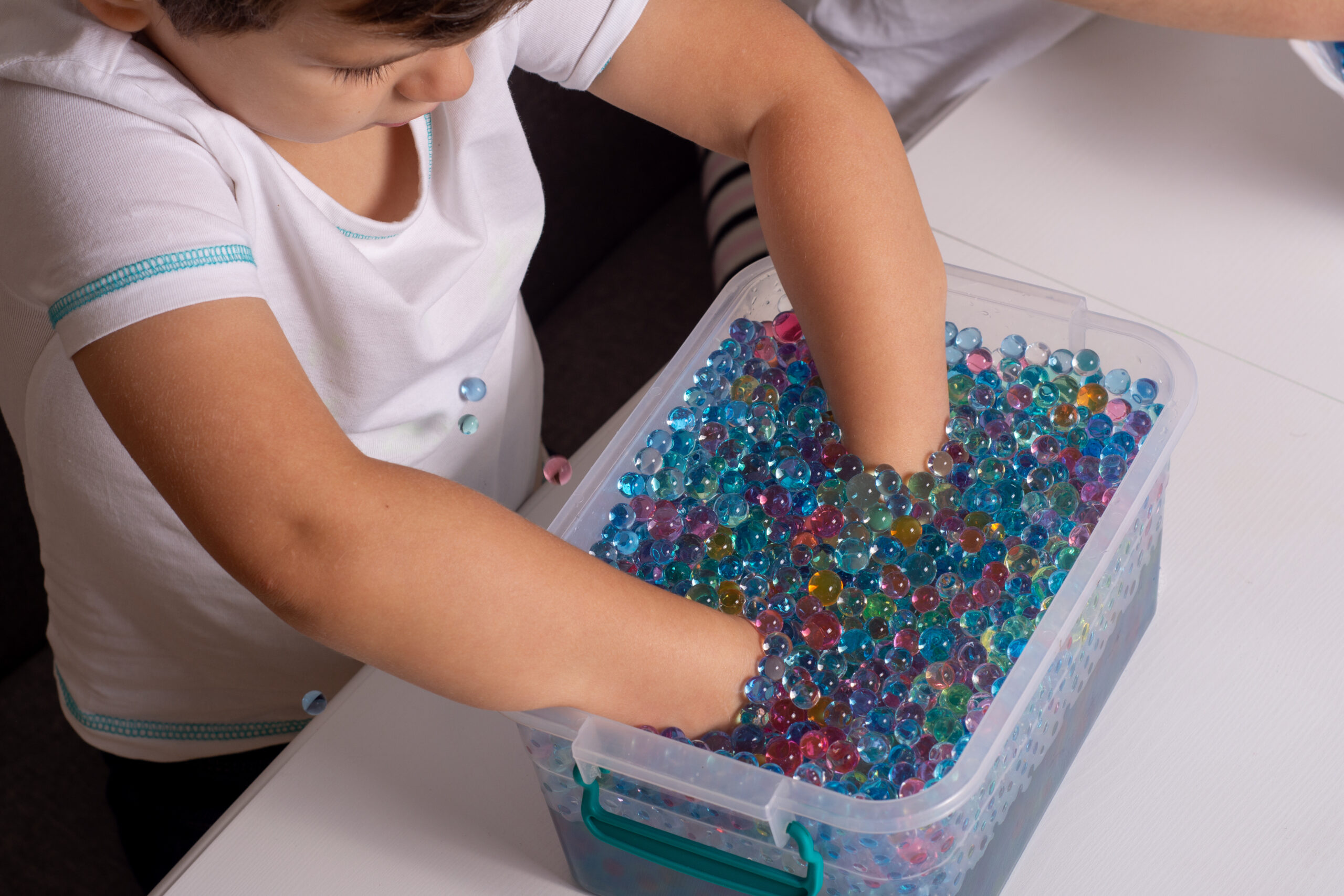
There is growing unrest inside the U.S. Consumer Product Safety Commission (CPSC) due to a contentious postponement in the completion of guidelines concerning water beads—tiny, vividly colored polymer spheres that present significant dangers to kids. Although warnings and unfortunate events associated with these items have existed for quite some time, initiatives to implement more rigorous safety standards have encountered political resistance.
Water beads, also known as sensory beads or gel beads, have raised red flags among health and safety experts due to their capacity to expand significantly when exposed to liquids. When ingested, they can grow large enough to obstruct a child’s digestive or respiratory system. Tragically, in 2023, the death of a 10-month-old girl was reportedly linked to swallowing water beads, underscoring the potential danger these toys present in a household with small children.
For years, the CPSC has warned caregivers about the hazards posed by water beads. The commission had been poised to release a final regulatory decision on the matter in mid-July 2025. However, that anticipated announcement did not come. Two commissioners within the agency are now publicly criticizing the delay, accusing Acting Chair Peter Feldman of halting the process without any formal explanation.
Commissioner Richard Trumka, Jr., in a strongly phrased announcement, conveyed his disappointment with the halted action. He highlighted that July 16 was meant to signify a significant shift for child protection through the introduction of a regulation that might have reduced injuries and deaths associated with water beads. However, he states, the commission was rendered voiceless.
Trumka further accused Feldman of canceling the commission’s annual priorities hearing—a key opportunity for public voices, including those of affected parents, to be heard. “Children’s lives are too important for inaction,” Trumka declared, urging Feldman to move forward with meaningful safety measures rather than deferring decisions indefinitely.
Another member of the commission, Alexander Hoehn-Saric, expressed similar worries, urging clarity about the causes for postponing both the water bead regulations and another upcoming rule concerning button battery dangers.
The CPSC responded by asserting that there had been no delay in the formal process and maintained that the agency was following standard regulatory procedures. A spokesperson emphasized that current operations are in line with executive directives aimed at promoting interagency review and ensuring consistency in rulemaking.
The debate over the water bead decision comes amid broader political turmoil within the commission itself. In May 2025, the President removed three commissioners who had been nominated by his predecessor. Although those dismissals were subsequently reversed by a federal district court, the administration appealed to the Supreme Court, seeking to reassert control over the independent agency.
The current legal dispute introduces an additional element of intricacy to the CPSC’s internal workings. The organization, generally functioning with a commission of five members, has been involved in turbulence as the White House aims to restructure its leadership. Feldman, first appointed during the President’s initial term and subsequently promoted to acting chair, has encountered criticism for choices that detractors argue favor politics over the well-being of the public.
At the same time, retail companies have reacted to the increasing controversy. Large brands such as Amazon, Walmart, and Target have taken water bead products off their shelves, especially those aimed at children. This decision comes after pressure from legislators, health authorities, and worried parents.
The potential risk of water beads is found in their makeup. Composed of a superabsorbent polymer, these small spheres can expand up to 100 times their original size when in contact with water—or bodily fluids if swallowed. Consequently, they are associated with intestinal obstructions, breathing issues, and contact with toxic substances.
Despite the lack of a formal ban, the CPSC has issued public safety advisories, urging families to keep water beads away from young children and remove any existing products from the home. These warnings remain in effect while the commission navigates internal disagreements and external legal challenges.
Adding to the problem, the CPSC was unable to advance with a different regulation last week designed to reduce dangers linked to button batteries. These tiny batteries, commonly used in toys and electronics, can be fatal if ingested. When swallowed, they might react with saliva, generating an electrical current that can lead to serious burns in the esophagus.
For families and those who champion the safety of children, the postponements bring into question the agency’s capability to respond effectively when confronted with recognized dangers. Despite the influence of bureaucratic and legal protocols on policy formation, detractors contend that avoidable injuries and fatalities should not become victims of governmental indecisiveness.
As the internal conflict at the CPSC continues to unfold, the fate of the water bead regulation remains uncertain. The case is a stark example of how regulatory processes—often invisible to the public—can have direct, sometimes life-threatening consequences for everyday consumers, especially the youngest and most vulnerable.
If immediate steps are not taken, families must handle product safety by themselves, depending on company choices, public alerts, and being personally cautious to keep their children safe. The responsibility now lies not just with authorities, but also with the wider community to insist on responsibility, openness, and a steadfast dedication to protecting children.