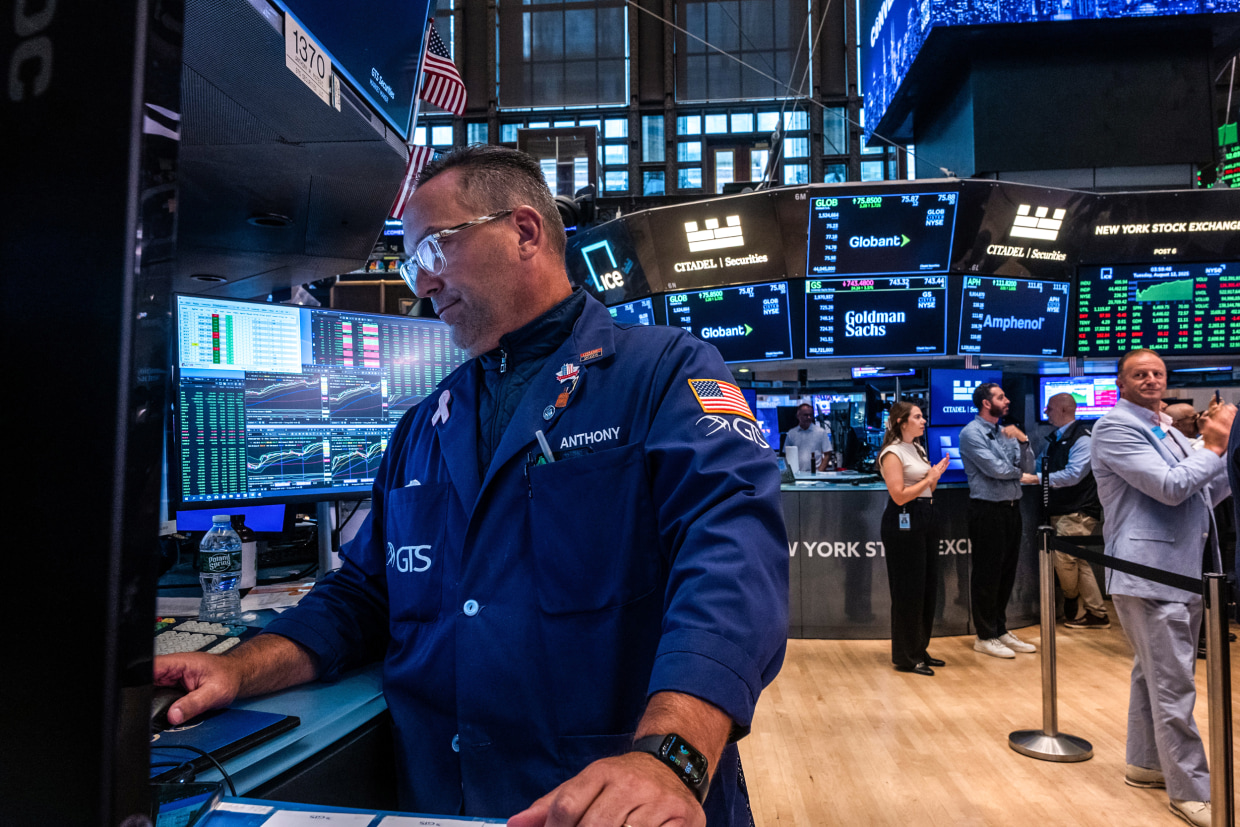
In a surprising turn of events, financial markets across the globe are exhibiting a notable calm in the face of new tariff announcements from the Trump administration. Despite a history of volatility in response to trade disputes, the current market climate appears to be taking the latest round of protectionist measures in stride. This trend marks a significant departure from past reactions and suggests a deeper economic story at play, one that involves a complex interplay of monetary policy, corporate earnings, and evolving investor sentiment.
The first wave of a trade conflict in past years frequently caused global markets to spiral downward, as investors reacted anxiously to the likelihood of interrupted supply chains and diminished economic expansion. Nonetheless, the latest announcements have been received with a more balanced, and occasionally even varied, reaction. Although some industries and businesses with significant international dealings have demonstrated vulnerability, the general indexes have mostly maintained their position. This tenacity indicates a market that has either grown indifferent to such policy changes or has discovered other elements to concentrate on.
One of the most significant reasons for the market’s apparent indifference is the anticipation of supportive monetary policy. The Federal Reserve, facing signs of economic strain, is widely expected to cut interest rates in the near future. The prospect of cheaper borrowing costs and a more accommodative financial environment acts as a powerful counterbalance to the deflationary pressures and economic uncertainty that tariffs can create. Investors, it seems, are betting that central bank action will be a more potent force than trade policy in shaping the economy’s short-term trajectory.
Another important element is how well corporations are performing financially. Even with the challenges from tariffs, several major U.S. businesses have announced profits that exceeded expectations. This flood of favorable economic updates has contributed to easing concerns about a general downturn economically. It indicates that some firms have discovered methods to adjust to the new trade conditions, whether by changing their supply chain strategies, transferring costs to customers, or concentrating on local sales. The market appreciates businesses that can show they can succeed amid geopolitical challenges.
The market has gained a more detailed insight into the characteristics of these tariffs. Unlike past occurrences where such announcements were unexpected, the recent wave of tariffs was mostly communicated to the market ahead of time. This advance notice provided investors and companies with the opportunity to prepare and adapt, lessening the surprise factor that typically drives market turbulence. Although the policy is still a cause for ongoing worry, its predictability has lessened its ability to provoke an instant market crash.
The ongoing trade policies have also revealed a distinct divide in the market’s performance. While the major indexes have shown resilience, a closer look reveals that some sectors are being hit much harder than others. Export-oriented industries and companies that rely heavily on complex international supply chains have borne the brunt of the negative impact. In contrast, domestically focused companies and those with less exposure to global trade have performed relatively well, demonstrating that not all parts of the economy are equally vulnerable to the effects of protectionism.
The market’s reaction also reflects a change in the perception of tariffs themselves. Initially viewed as a temporary negotiating tactic, a growing number of investors now see them as a more permanent feature of U.S. trade policy. This shift has forced businesses to move beyond short-term contingency planning and to make long-term strategic adjustments, such as diversifying their supply chains or even moving production back to the United States. While this may be costly, the market appears to be recognizing that these changes, however painful, are a new and lasting reality.
Furthermore, the stock market’s resilience is a reflection of its deep liquidity and its ability to absorb a vast amount of information without panic. With trillions of dollars in play, the market is a complex ecosystem where different forces are constantly at odds. While the fear of a trade war is a powerful negative influence, it is being offset by other positive factors, such as strong technological innovation, the potential for interest rate cuts, and a general belief in the long-term health of the American economy. This balance of power has led to a market that is more stable, even in the face of significant political risk.
The response from international markets has also been surprisingly muted. While some countries directly targeted by the new tariffs have seen a negative impact on their specific industries, the broader global indexes have not shown signs of a widespread panic. In fact, some foreign markets have seen gains, fueled by their own domestic economic strength and a growing belief that the impact of U.S. tariffs will be contained. This suggests that the global economy may be more resilient and less interconnected than once thought, at least in its ability to absorb these policy shocks.
The indifferent response of the stock market to the newest trade tariffs is a multifaceted situation influenced by a variety of factors. It reflects a market that has adjusted to the current political environment, where accommodating monetary policies, robust corporate profits, and altered investor anticipations have collectively acted to mitigate the adverse impacts of protectionism. This perseverance, while comforting to a lot of investors, also conceals a more profound narrative of sectoral disparities and enduring strategic changes that are set to redefine the worldwide economic scene in the coming years.