The Multifaceted Symbolism in Stanley Kubrick’s ‘The Shining’
1980’s film adaptation of ‘The Shining’ by Stanley Kubrick, based on Stephen King’s novel, transcends the typical psychological horror genre to become a true maze of symbolism, intricate meanings, and film references. The Overlook Hotel serves not merely as a setting for fright but as a dynamic entity, its architecture filled with motifs that require analysis. In-depth examination of Kubrick’s symbolic approach unveils how the movie generates a lasting feeling of discomfort, igniting years of critical discussion and audience intrigue.
The Overlook Hotel: A Manifestation of Psychological and Historical Hauntings
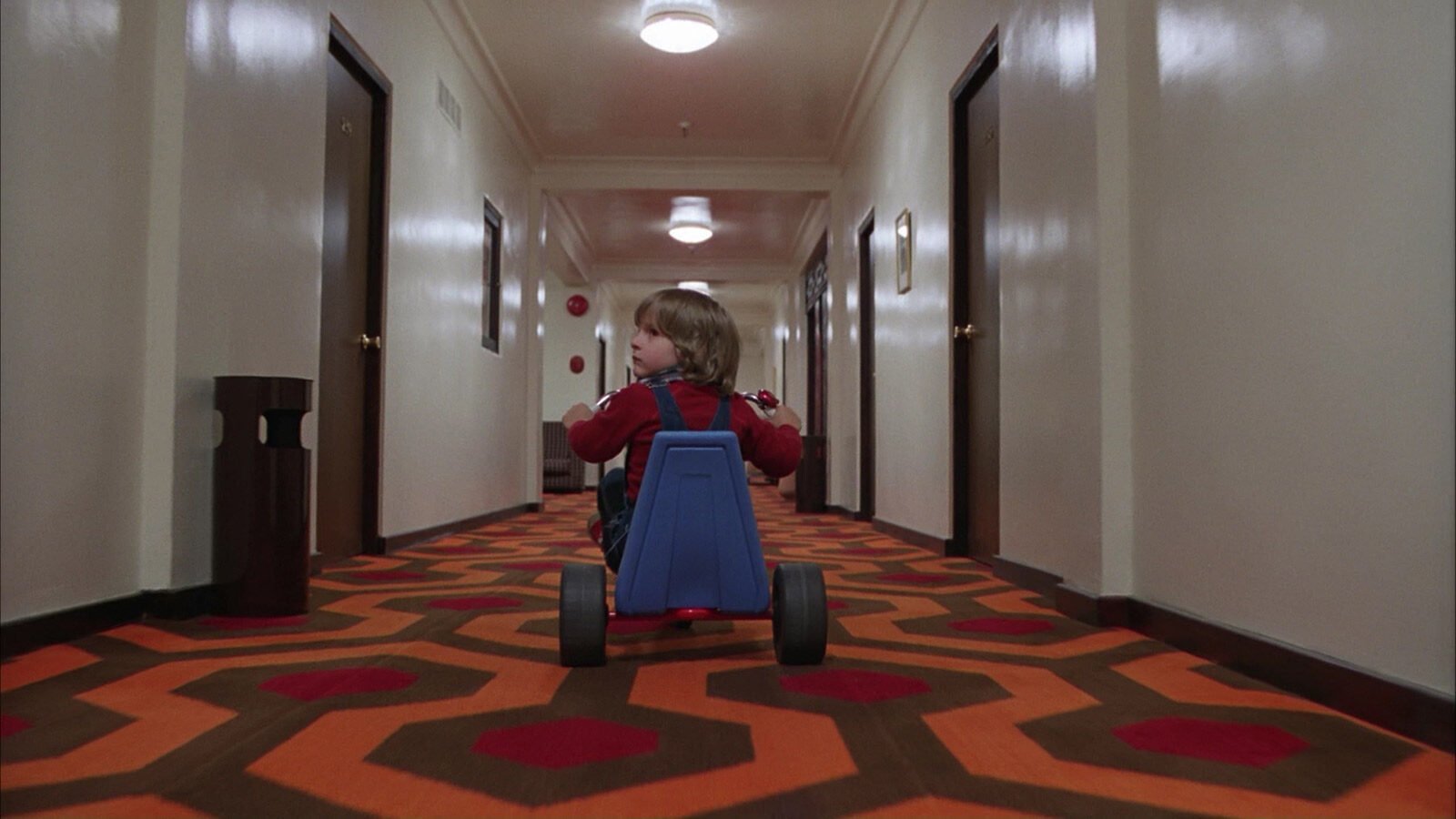
The Overlook Hotel emerges as a significant location and an emblem of mental confinement. Its shifting design, inconceivable windows, and labyrinthine hallways create a sense of confusion, mirroring Jack Torrance’s worsening mind. The hotel acts as a small-scale version of suppression—a magnificent structure based on violence and hidden truths. The repetitive theme of Indigenous American symbols, embedded in carpets and wall designs, indicates the hotel is erected on the scars of America’s past.
Some scholars argue that Kubrick intentionally highlights the United States’ conflicted past, notably through references to genocide. Stuart Ullman’s mention of the hotel being built on an “Indian burial ground,” supported by Calumet baking powder cans and woven native patterns, connects the supernatural events to a broader cultural amnesia.
The Maze: Complexity, Entrapment, and Mind Games
Central to the film’s symbolism is the hedge maze—an invention unique to Kubrick’s adaptation. Serving both as a literal and metaphorical labyrinth, the maze represents Jack’s fractured psyche, deeper psychological puzzles, and the broader theme of existential bewilderment. The aerial shots of Danny running through the paths, coupled with Jack’s eventual futile chase, represent a struggle both internal and external. The labyrinthine nature of the maze mirrors the hotel’s architectural contradictions and the puzzling layout that defies spatial logic.
The maze’s resolution—Danny escaping by walking backwards in his own tracks—serves as a symbol of cleverness and survival through psychological resilience. This contrasts sharply with Jack’s failure to break free from his obsessions and violent urges.
The Hue of Scarlet: Aggression, Alert, and Ubiquitous Fear
Kubrick employs color symbolism throughout the film, but red stands out as a harbinger of violence and psychological collapse. The doors of Room 237, the infamous “REDRUM” inscription, and the cascade of blood flowing from the elevator doors all magnify the underlying sense of doom. Each red motif is carefully framed, signaling impending danger or emotional turmoil. Wendy swinging a bat in the blood-red corridors, Danny encountering the twin girls in matching dresses, and the unsettling play of shadow and light underscore Kubrick’s intent to make red an omnipresent threat.
Reflections and Mirrors: Duality and Separation
Mirrors and reflections hold a significant role in the symbolic landscape, highlighting the concept of duality. Mirrors reveal Jack’s spiral into insanity, especially during the iconic bathroom sequence with the spectral woman from Room 237. The discovery of “REDRUM” as “MURDER” in the mirror captures the movie’s investigation of inverted realities and concealed truths. Scenes where characters face their own reflections underscore personal conflict and the splitting of the self.
Moreover, many key moments occur near or in front of mirrors—Jack’s initial encounter with Delbert Grady, the ghostly bartender Lloyd’s appearances, and pivotal plot twists all unfold through this reflective motif. The disintegration of identity and the blurring of reality add layers of tension and ambiguity.
‘The Shining’: Telepathy, Psychological Impact, and Concealed Links
Danny’s psychic powers, known as “the shining,” represent both a burden and a gift of understanding. His experiences, filled with ominous visions and the voice of his imaginary friend Tony, illustrate the weight of precognition and a heightened awareness of turmoil. The title is a metaphor for inner light—the ability to see beyond the obvious.
Hallorann, the hotel’s chef, recognizes Danny’s gift, forming a spiritual kinship that transcends physical space. The unspoken understanding between them suggests the possibility of empathy and resilience in the face of overwhelming darkness.
The Enchanted History and Recurring Time
“The Shining” examines the themes of repetition and cyclic violence. The image at the end of the movie, showing Jack at the hotel’s Independence Ball in 1921, alludes to his perpetual imprisonment in the place of previous terrors. Grady’s statement, “You have always been the caretaker,” confuses the lines between past and present, implying that trauma and malevolence repeat themselves across different generations.
The movie subtly hints at endless cycles through conversations, scenes, and the camera’s recurring motions. The hotel’s grip on its guests serves as a metaphor for the inescapability of the past, intensifying themes of fatalism and history replaying itself.
Room 237 and Forbidden Knowledge
Room 237 functions as a locus of forbidden knowledge, representing the allure and danger of uncovering truths that are best left concealed. Characters who enter are confronted with manifestations of their deepest fears and desires. Jack’s erotic and decaying visions while inside, and Danny’s traumatized silence after his own encounter, amplify the room’s status as a site of psychological repression.
Fans and analysts have suggested that Room 237 is emblematic of suppressed trauma—the room where society’s collective nightmares are locked away, only to manifest explosively when repressed too long.
Symbolism Through Music and Sound
Kubrick’s precise application of sound and music adds depth to the movie’s symbolic environment. The discordant score, crafted by Wendy Carlos and Rachel Elkind, unsettles the viewers’ perception of reality, invoking deep-seated fear and blurring the lines of time. The sounds of footsteps, murmured voices, and the recurring tricycle motif heighten a sense of eerie repetition and mental unrest.
The Enduring Mystery and Multiplicity of Meaning
Kubrick’s “The Shining” resists a straightforward explanation, as its outstanding ambiguity fuels endless debates. By intertwining themes of spatial confusion, color, reflections, and the passage of time, Kubrick presents a reflection on the enduring presence of trauma—both on an individual and societal level. The film’s symbols encourage the audience to participate in a multifaceted enigma, serving simultaneously as a story of family disintegration, a critique of America’s past, and a study of the mysterious.
Instead of finding a peaceful conclusion, ‘The Shining’ secures its lasting impact by continually reflecting the anxieties and wishes of those looking into its depths. Through its imagery, it maps out a terrain that is at once known and strange—each observation uncovering fresh paths in its maze of significance.