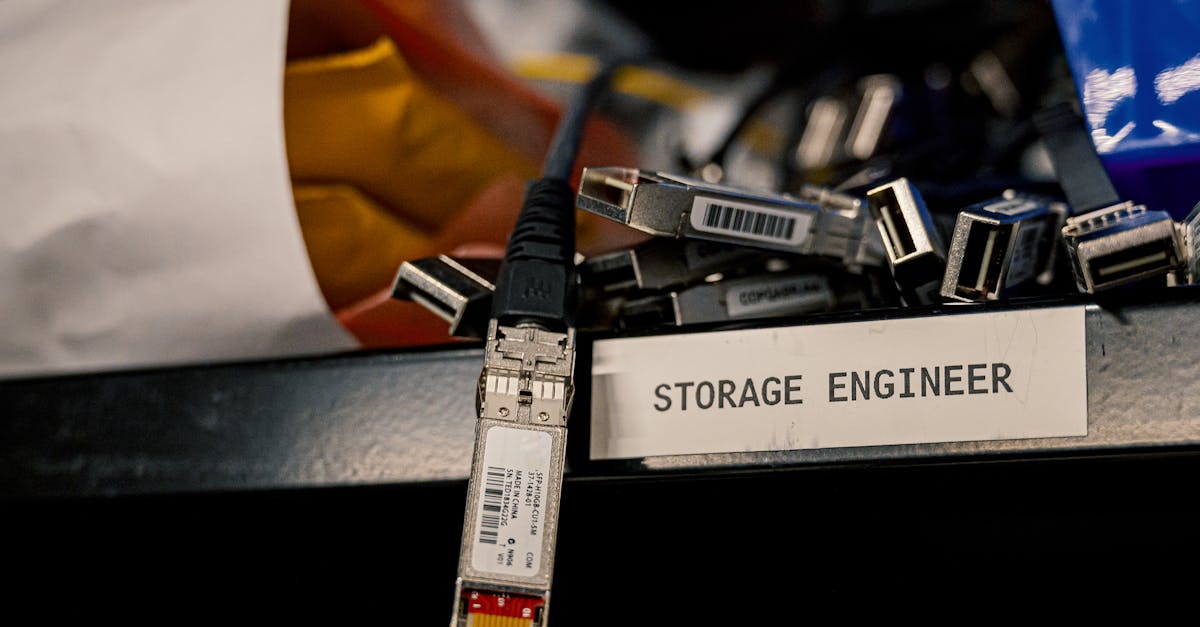
Data storage has evolved from rigid cardboard punch cards to globally distributed, software-defined systems capable of storing zettabytes of information. Each breakthrough has reshaped computing, business, and daily life. Below are the twelve most significant advances in data storage since the era of punch cards, presented in chronological and technological progression.
1. Magnetic Tape: The First Scalable Digital Storage
During the 1950s, magnetic tape made its debut as the initial viable substitute for punch cards. Rather than relying on physical perforations in paper, this medium retained information by magnetizing particles along a plastic film.
Key impact:
- Enabled sequential storage of large datasets.
- Reduced physical storage space compared to paper systems.
- Became foundational for enterprise backup systems.
IBM’s 726 tape drive stored roughly 2 megabytes per reel. Modern Linear Tape-Open cartridges now exceed 18 terabytes natively, demonstrating the enduring relevance of tape for archival storage.
2. Hard Disk Drives (HDDs): Random Access Revolution
Launched back in 1956 alongside the IBM’s RAMAC 305, hard disk drives substituted sequential access with random access storage. Information was now able to be fetched immediately without having to scan a whole medium.
Key impact:
- Faster data retrieval for business applications.
- Enabled real-time transaction processing.
- Laid the foundation for modern operating systems.
The initial hard drive held just 5 megabytes and tipped the scales at over a ton. Nowadays, enterprise storage solutions surpass 30 terabytes within a standard 3.5-inch footprint.
3. Floppy Disks: Portable Personal Storage
The floppy disk, introduced in the 1970s, made data portable for individuals. With capacities ranging from 80 kilobytes to 1.44 megabytes, it supported the rise of personal computing.
Key impact:
- Streamlined software delivery.
- Facilitated file sharing prior to widespread network connectivity.
- Standardized portable storage media formats.
Though obsolete today, floppy disks pioneered the concept of personal, removable digital media.
4. Optical Storage: CDs and DVDs
Optical discs used lasers instead of magnetic fields to read and write data. The compact disc stored about 700 megabytes, while DVDs reached 4.7 gigabytes or more.
Key impact:
- High-capacity distribution of music, software, and video.
- Enhanced durability relative to floppy disks.
- Sophisticated error-correction techniques.
Optical storage fueled the digital entertainment revolution of the 1990s and early 2000s.
5. RAID Technology: Redundancy and Performance
Redundant Array of Independent Disks technology combined multiple drives into a single logical unit. Introduced in the late 1980s, RAID improved performance and reliability.
Key impact:
- Safeguarded against disk crashes.
- Enhanced throughput through parallel processing.
- Facilitated enterprise-level storage architectures.
RAID configurations remain central in data centers, even as drive technologies evolve.
6. Solid-State Drives (SSDs): Flash Memory Acceleration
SSDs replaced spinning disks with NAND flash memory. Without moving parts, they offered dramatically lower latency and higher durability.
Key impact:
- Boot times reduced from minutes to seconds.
- Data access speeds improved by orders of magnitude.
- Lower power consumption in laptops and servers.
Modern NVMe SSDs exceed 7,000 megabytes per second in sequential read speeds, transforming performance expectations.
7. USB Flash Drives and Memory Cards: Ultra-Portable Storage
Flash-based removable storage devices brought gigabytes of capacity into pocket-sized formats.
Key impact:
- Simplified data transport.
- Enabled mobile device storage expansion.
- Accelerated digital photography and multimedia sharing.
Capacities have expanded from a modest 8 megabytes in the earliest versions to exceeding 1 terabyte currently.
8. Network Attached Storage (NAS): Centralized Access
NAS systems provided shared storage over local networks, allowing multiple users to access centralized data.
Key impact:
- Better collaboration among office staff.
- Streamlined backup administration.
- Minimized duplicate storage across various hardware.
NAS systems are increasingly utilized by small businesses and residential households to establish private cloud-like infrastructures.
9. Cloud Storage: Global Scalability
Cloud storage abstracted physical infrastructure into on-demand services. Providers such as Amazon Web Services and Microsoft Azure enabled elastic storage scaling.
Key impact:
- Pay-as-you-go pricing structures.
- Worldwide availability.
- Integrated redundancy spanning multiple geographic zones.
By 2025, worldwide cloud storage capacity reaches zettabyte scales, powering streaming services, artificial intelligence processing, and remote employment infrastructures.
10. Object Storage Architecture: Metadata at Scale
Object storage departed from hierarchical file systems. Each object includes data, metadata, and a unique identifier.
Key impact:
- Engineered for high-volume unstructured information.
- Enhanced scalability well beyond conventional file repositories.
- Facilitated streamlined storage capabilities tailored for artificial intelligence and data analytics.
This architecture underpins major cloud platforms and supports billions of objects per cluster.
11. Software-Defined Storage: Hardware Abstraction
Software-defined storage decoupled storage management from physical hardware. Control moved into software layers.
Key impact:
- Greater flexibility and automation.
- Vendor-agnostic infrastructure.
- Improved resource utilization.
Organizations can now oversee hybrid setups merging on-premises and cloud repositories via consolidated dashboards.
12. DNA and Experimental Storage: The Frontier
Emerging technologies like DNA data storage convert binary data into synthetic DNA sequences. Theoretically, a solitary gram of this genetic material is capable of holding upwards of 200 petabytes.
Key impact:
- Extreme density potential.
- Long-term archival durability.
- Radically new storage paradigms.
Although still experimental, DNA storage demonstrates how far innovation has moved beyond magnetic and electronic media.
The Expanding Arc of Data Preservation
From the mechanical rigidity of punch cards to molecular encoding, each storage breakthrough has reduced physical constraints while increasing speed, reliability, and accessibility. The trajectory reveals a clear pattern: storage is becoming less visible, more distributed, and increasingly intelligent. As data volumes accelerate through artificial intelligence, connected devices, and global digitization, storage systems are evolving from passive repositories into active, software-driven ecosystems that shape how knowledge is preserved, accessed, and transformed.