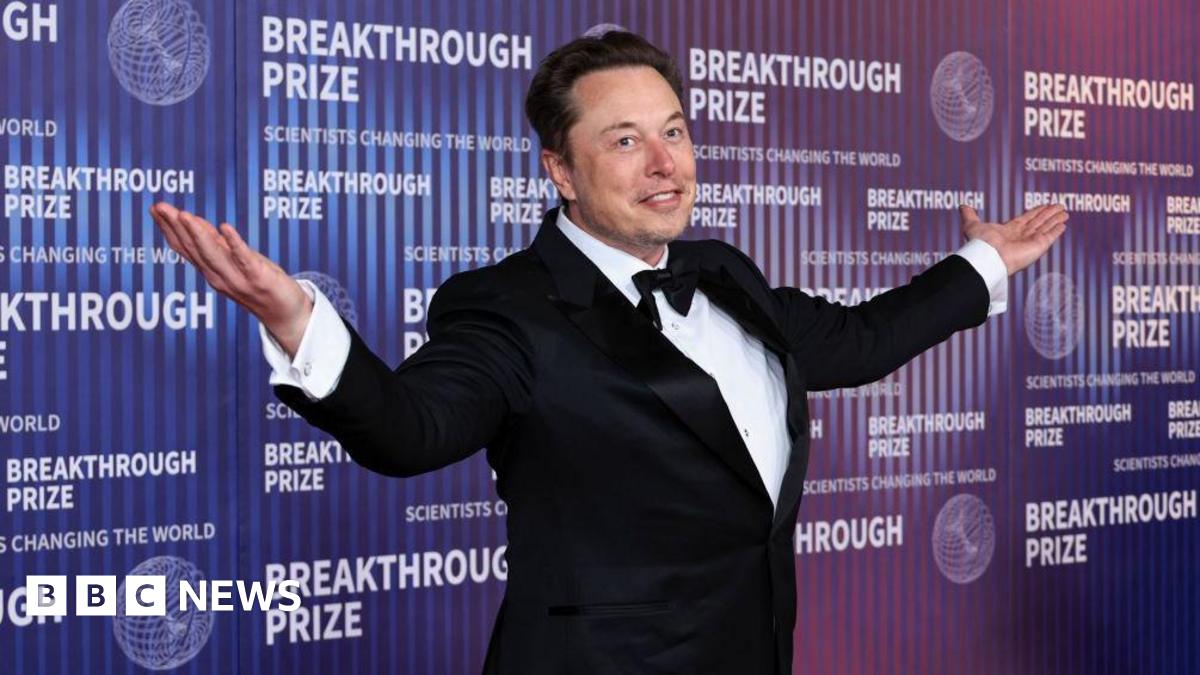
Tesla CEO Elon Musk has been granted a substantial stock award valued at approximately $29 billion, marking one of the largest executive compensation packages in corporate history. The award, tied to a multi-year performance agreement, underscores Musk’s pivotal role in the company’s rapid growth and reflects Tesla’s confidence in his leadership going forward.
The remuneration plan, initially sanctioned by Tesla’s board and shareholders some years back, ties Musk’s possible income to a set of challenging goals related to operations and market capitalization. This most recent portion of shares was activated once Tesla achieved certain objectives, like ongoing revenue increases, profitability aims, and a prolonged escalation in the company’s market worth.
This share grant is included in a wider incentive scheme initiated in 2018, which created a structure allowing Musk to secure up to 12 portions of stock options if Tesla met various financial and strategic targets. With this latest distribution, Musk has now accomplished multiple of those benchmarks, deepening his financial commitment to the enduring success of the electric vehicle manufacturer.
Critics of the plan have voiced concerns about income inequality and the scale of executive pay in public companies. Nonetheless, supporters argue that Musk’s compensation is directly tied to extraordinary achievements that have significantly increased shareholder value. Since the plan’s inception, Tesla’s market capitalization has risen dramatically—at times exceeding $1 trillion—fueled by strong vehicle sales, expansion into global markets, and a growing energy storage and battery business.
The $29 billion valuation of Musk’s latest share award is based on Tesla’s current stock price and the number of vested options. It’s important to note that while this amount reflects theoretical value, Musk would need to exercise the options and possibly hold or sell shares to realize the full financial benefit. Additionally, he may face substantial tax obligations depending on how and when he executes the award.
Tesla’s method for compensating Musk is quite exceptional in the business sector. Different from many CEOs, he doesn’t earn a salary or receive cash bonuses. Rather, his income comes solely from incentives connected to stock performance, ensuring that his goals match those of the investors. This strategy, albeit unusual, has gained attention in debates regarding leader responsibility and investor profits.
The firm has justified the arrangement of Musk’s compensation plan by emphasizing the significant changes his leadership has brought about. During his leadership, Tesla has moved from being a specialized electric vehicle startup to an international manufacturing leader and a prominent innovator in sustainable energy. The company’s offerings now feature mainstream vehicles like the Model 3 and Model Y, premium models like the Model S and Model X, and industrial items including the Tesla Semi and energy solutions provided by Tesla Energy.
Tesla’s board of directors, in their official communications, have praised Musk for his relentless drive, technical expertise, and long-term vision. They contend that his leadership has been instrumental in pushing the company through periods of intense financial pressure and operational scaling.
Elon Musk’s growing stake in Tesla also reinforces his influence over the company’s future direction. As one of its largest individual shareholders, he retains considerable voting power and strategic sway. This dual role—as both chief executive and major investor—has occasionally sparked debates about governance and oversight, particularly among institutional shareholders and corporate watchdogs.
In the world of finance, the announcement of the stock compensation has elicited varied responses. Some experts see it as a well-deserved recognition for a CEO who has achieved remarkable outcomes, whereas others warn about establishing a benchmark for equally aggressive compensation schemes in other publicly traded corporations. Despite this, Tesla’s stock has shown strength, supported by ongoing investor confidence and the company’s strong quarterly performance.
Beyond the financial headlines, Musk’s stock award symbolizes a broader shift in how executive compensation is being structured in high-growth technology companies. With performance-driven plans gaining traction, boards are increasingly tying executive wealth to long-term metrics rather than short-term earnings or fixed salaries.
As Tesla continues to expand into new markets and technologies—including artificial intelligence, self-driving software, and lithium refining—Musk’s role is likely to remain central to the company’s strategic roadmap. Whether the current compensation framework will be adjusted or renewed in the future remains to be seen, but for now, the focus remains on execution and innovation.
The $29 billion figure is likely to feature prominently in public discussions around wealth concentration and corporate responsibility. However, it also serves as a case study in how bold leadership, when tied to clearly defined goals, can lead to unprecedented rewards—not only for the individual but for a company’s shareholders as well.
Over the next few months, Tesla shareholders and analysts will closely observe how the ongoing leadership of Musk influences the company’s path, particularly in the face of escalating competition in the electric vehicle field and changing global regulatory settings.
While compensation at this scale is bound to provoke debate, Tesla’s approach reflects a high-risk, high-reward philosophy that has so far delivered impressive results. Whether this model becomes a blueprint for future corporate governance or remains a singular case will depend on the company’s ability to sustain its momentum—and Musk’s ability to continue delivering on his ambitious vision.